The appetite for experimental form factors is apparently higher than anyone anticipated. On January 30, Samsung launched its Galaxy Z TriFold in the United States, and it took all of four minutes for inventory to evaporate. According to reports from SammyGuru, the triple-folding device was listed on Samsung’s US storefront and initially allowed users to add it to their carts. Moments later, however, those orders were effectively scrubbed, replaced by notifications stating that individual items were unavailable due to “high demand.”
Currently, the model is listed as completely sold out, with no confirmed date for a restock. Even determined buyers who refreshed the page repeatedly and managed to reach the checkout screen found themselves redirected back to the product page, their orders automatically canceled. Naturally, the secondary market has wasted no time; the device is already appearing on eBay with scalpers asking for astronomical markups over the original retail price.
Hype or Artificial Scarcity?
It remains unclear whether this instant sell-out was driven by genuine, overwhelming consumer interest or if Samsung simply released a meager initial batch. The company hasn’t commented on the inventory numbers, but the positioning of the device offers a clue. With a steep US price tag of $2,899, the Galaxy Z TriFold isn’t intended to be a mass-market handset. It is a technical showcase, designed to assert dominance in the foldable space.
Samsung markets the device as a legitimate hybrid—part smartphone, part tablet, and part workstation. When fully unfurled, the inner display spans 10 inches, capable of running three apps simultaneously. It also supports various folding angles, allowing it to function as a mini-laptop or a presentation display. Despite the complex hinge mechanism, Samsung is promising durability with an Armor Aluminum frame and Gorilla Glass Victus 3, backed by seven years of Android and security updates. It’s a clear signal that the company is betting on longevity, even for its most experimental hardware.
The Mainstream Powerhouse: S25 Ultra vs. S22 Ultra
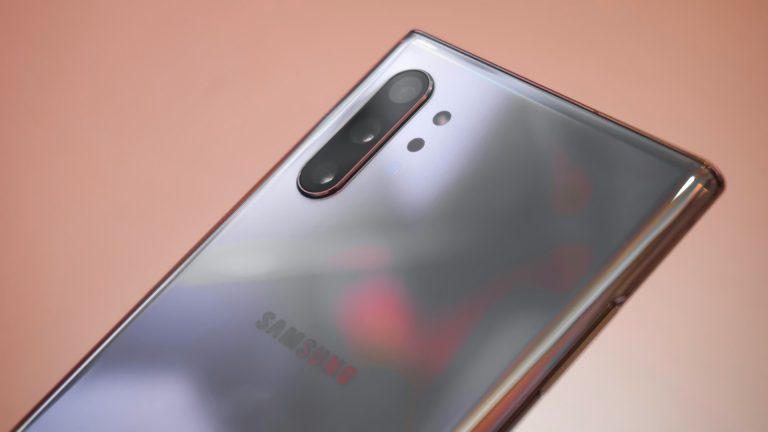
While the TriFold captures the headlines for innovation, the real volume mover remains the Galaxy S Ultra series. For users currently holding onto the Galaxy S22 Ultra from 2022, the newly released Galaxy S25 Ultra presents a compelling, if expensive, case for an upgrade. Three years in the tech world is a lifetime, and the spec sheet comparison between these two titans reveals just how much the landscape has shifted.
Visually, the evolution is subtle but significant. The S25 Ultra has shed some weight, coming in at 218g compared to the S22 Ultra’s 229g, largely thanks to a switch from an aluminum frame to titanium. The display has grown slightly to 6.9 inches, but the real story is the brightness. The S22 Ultra was no slouch at 1,750 nits, but the S25 Ultra pushes that to a blinding 2,600 nits, protected by the newer Gorilla Glass Armor 2.
A Generational Leap in Performance
Under the hood, the difference is night and day. The S22 Ultra ran on the Snapdragon 8 Gen 1 (or the Exynos 2200 in some regions), a chip that struggled with thermal efficiency. The S25 Ultra packs the Snapdragon 8 Elite for Galaxy. In benchmark tests, this translates to raw power that is nearly double that of its predecessor. GeekBench 6 multi-core scores jumped from around 3,551 on the S22 Ultra to a staggering 9,769 on the S25 Ultra.
This efficiency gain solves one of the biggest complaints of the S22 generation: battery life. On paper, both phones utilize a 5,000 mAh cell with 45W wired charging. In practice, however, the optimization on the S25 Ultra is remarkable. Browsing tests show the new model lasting nearly 21 hours, a massive improvement over the S22 Ultra’s 13 hours. Gaming endurance has essentially doubled, going from roughly 7 hours to over 14 hours.
The Price of Progress
The entry cost has crept up, but so have the base specifications. While the S22 Ultra started with 8GB of RAM, the S25 Ultra makes 12GB the standard across the board, utilizing faster LPDDR5X memory and UFS 4.0 storage. The base model now retails for $1,299, a $100 hike over the S22 Ultra’s launch price, though the base storage has also doubled to 256GB.
Between the frantic sell-out of the $2,899 TriFold and the calculated refinement of the S25 Ultra, Samsung is aggressively targeting both the bleeding-edge enthusiast and the power user looking for reliability. With software updates like One UI 8.5 already generating buzz, the company seems intent on proving that whether it folds once, twice, or not at all, they have a device for every tax bracket.